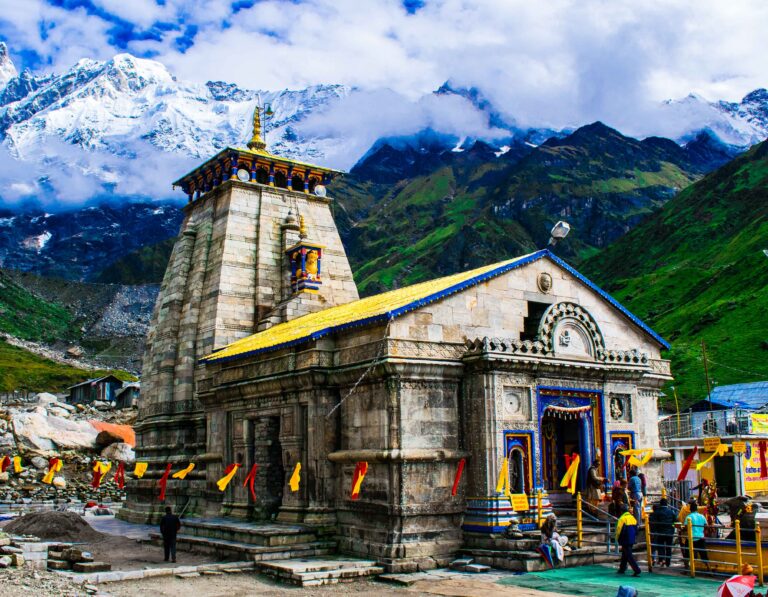
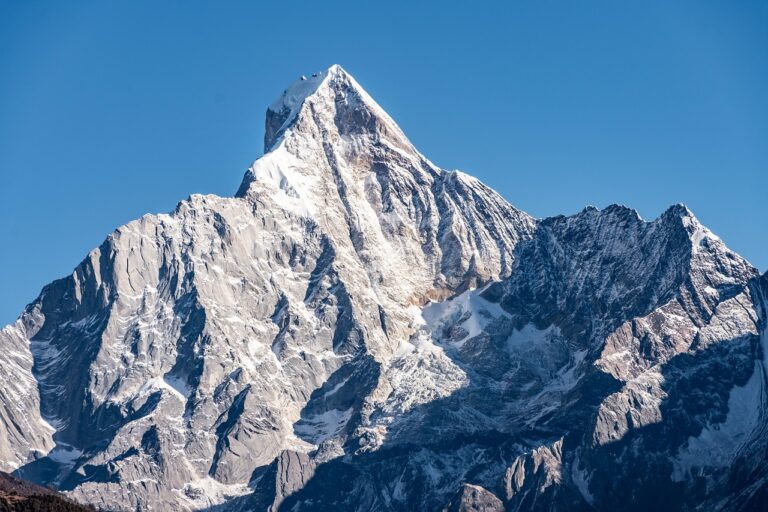
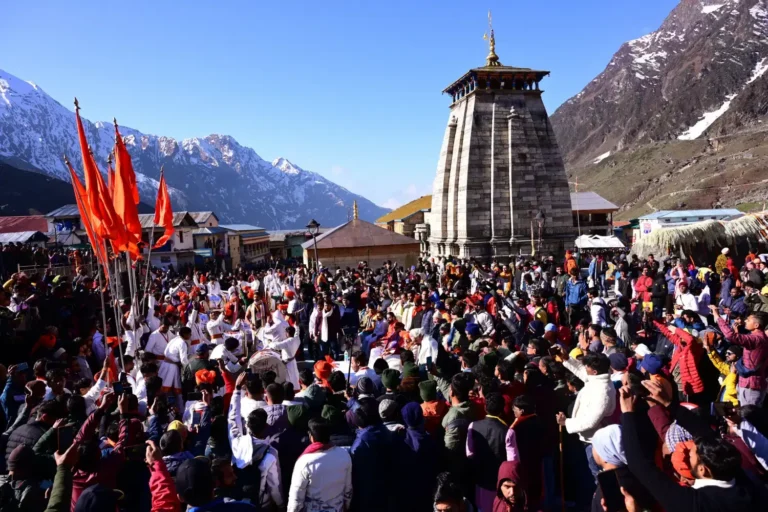
Haridwar, the sacred city on the banks of the Ganges River, has been a major starting point for pilgrims visiting Uttarakhand’s revered temples for centuries. Among the destinations on the Char Dham Yatra, Kedarnath Temple holds a special place as one of the twelve Jyotirlingas of Lord Shiva. The journey from Haridwar to Kedarnath combines open highways, winding mountain roads, serene rivers, and a final uphill trek, offering both spiritual reward and natural beauty.
1. Overview of the Pilgrimage
- Total Distance: Approximately 230–250 km from Haridwar to Gaurikund, the nearest road end point before the trek starts.
- Final Trek: 16–18 km uphill from Gaurikund to Kedarnath Temple.
- Typical Travel Time:
- Road Journey: 8–10 hours (Haridwar → Gaurikund/Sonprayag).
- Trek: 7–9 hours on foot; depending on fitness and weather.
- Best Season: May to October (Yatra season when roads and services are operational).
The journey is not just about reaching a destination; it’s a spiritual odyssey through rivers, hills, and ancient towns that enhance devotion and inner peace.
2. Starting Point: Haridwar
Haridwar is well connected:
By Train
Haridwar Junction is a major railhead, connected with Delhi, Mumbai, Kolkata, Chennai, and other key cities. Many pilgrims choose to arrive here first and acclimatize before beginning the mountainous journey.
By Road
Haridwar has excellent highway connectivity:
- From Delhi: ~230 km via NH334.
- From Dehradun or Rishikesh: Short distance and common starting points.
Overnight stays here before departure help travelers prepare for the long journey ahead—both logistically and spiritually.
3. Main Road Route: Haridwar → Kedarnath
People traveling from Haridwar generally take National Highways and state roads that spiral into the Himalayan foothills. The most common road route is:
Haridwar → Rishikesh → Devprayag → Srinagar → Rudraprayag → Guptkashi → Sonprayag → Gaurikund
Key Segments Explained
Haridwar to Rishikesh
- Distance: ~20–30 km.
- Time: ~30–45 minutes.
- Highlights: Spiritual vibes, river crossings, and preparations before mountain ascent.
Rishikesh to Devprayag
- Distance: ~50 km.
- Time: 1.5–2 hours.
- Highlight: At Devprayag, the rivers Bhagirathi and Alaknanda merge, forming the holy Ganga. Devotees often pause here for blessings.
Devprayag to Rudraprayag
- Distance: ~70–90 km from Haridwar.
- Time: ~3–4 hours.
- Highlights: Scenic riverside views, road bends, and lush valleys.
Rudraprayag to Guptkashi
- Distance: ~45 km.
- Time: ~2–3 hours.
- Role: An ideal overnight stopover for most travelers due to numerous guesthouses and dharamshalas.
Guptkashi to Sonprayag
- Distance: ~28 km.
- Time: ~1 hour.
- Role: Important base point for further transport arrangements and treks.
Sonprayag to Gaurikund
- Distance: ~5 km.
- Time: ~15–20 minutes by government shuttle jeep.
- Importance: Last motorable point before the trek.
This entire route covers about 230–240 km of diverse terrains and panoramic nature.
4. Flexible Travel Options
A. Road Journey (Bus / Shared Jeep / Taxi)
State Transport Buses
- Most economical choice.
- Run from Haridwar to Sonprayag/Guptkashi.
- Journey: ~8–12 hours.
Shared Jeep or Taxi
- Comfortable and relatively faster than buses.
- Shared jeeps or taxis can be booked in Haridwar or Rishikesh.
- Costs vary based on vehicle type.
Private Cab
- Best for families and elderly travelers.
- Offers flexible stops at scenic or spiritual sites (e.g., Devprayag, Rudraprayag).
- Generally takes 8–9 hours to reach Gaurikund base.
B. Train to Rishikesh + Road
Take a train from Haridwar to Rishikesh (20 km), then switch to a bus or cab for the mountain road trip. This mix helps reduce road fatigue early on.
C. Flight + Road
Fly into Jolly Grant Airport (Dehradun), then take a cab/bus to Sonprayag/Gaurikund. Best for those coming from distant cities like Mumbai, Chennai, or Bangalore.
5. The Final Ascent: Gaurikund to Kedarnath
Once you reach Gaurikund, the journey transitions from vehicle travel to mountain trekking:
Trekking
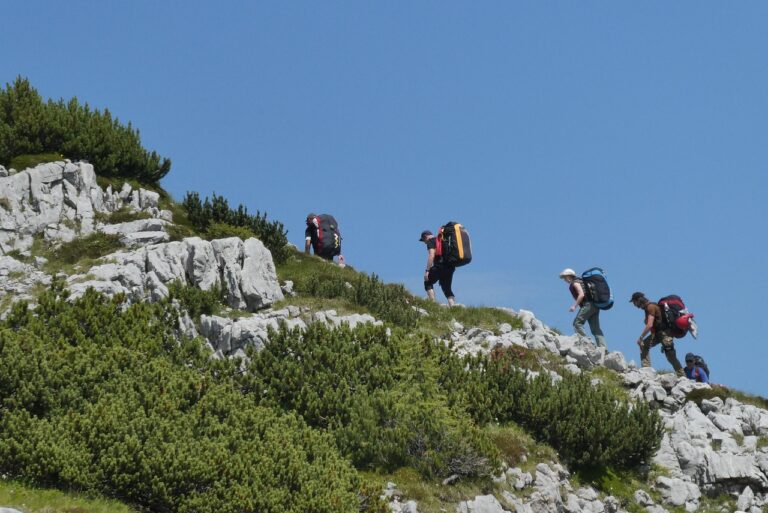
- Distance: ~16–18 km uphill.
- Time: 6–10 hours on foot.
- Terrain: Well-marked path with steps, occasional steep slopes, and handrails on key sections.
Alternate Options
- Ponies / Mules: Available for hire at fixed counters. They provide support for those unable to trek fully.
- Palanquin / Palki: Human-carried seats for elderly or physically challenged travelers.
These alternatives ease the physical demands of the trek while allowing devotees to reach the shrine with relative comfort.
6. Emerging Transport Innovations
Pilgrims now have additional options that further simplify and shorten the final journey:
A. Helicopter Services (Seasonal)
Helicopters from nearby helipads (e.g., Phata, Sersi, or Dehradun) fly to Kedarnath helipad, saving hours of travel and strenuous trekking.
- Ideal for elderly pilgrims and time-constrained travelers.
- Weather dependent and require advance booking.
B. Ropeway Project (Future)
Recent developments indicate a 12.9 km ropeway from Sonprayag to Kedarnath, expected to reduce the current 8–9 hour trek to only ~36 minutes once completed.
This project will dramatically change how pilgrims approach the shrine, making it far more accessible.
7. Travel Tips for an Easy Journey
1. Start Early
Most pilgrims leave Haridwar by first light (before 7–8 AM) to reach Gaurikund before dusk.
2. Weather Awareness
Mountain weather can change abruptly—check forecasts and prepare for rain, cold winds, or fog.
3. Comfortable Footwear
Good trekking shoes and warm layers are essential for the hill trek.
4. Hydration & Snacks
Carry water, energy bars, and light snacks for the trek.
5. Accommodation Planning
Stays at Haridwar, Rishikesh, Rudraprayag, or Guptkashi help split the road journey into manageable parts for a relaxed experience.
8. Cultural & Spiritual Highlights En Route
The route from Haridwar to Kedarnath is steeped in spirituality:
- Devprayag: Confluence of rivers and spiritual bathing site.
- Rudraprayag: Sacred junction linked to tales of Lord Shiva and the Pandavas.
- Guptkashi: Named after a secretive meditation site of the Pandavas, offering temples and views.
Each stop naturally invites pilgrims to pause, reflect, and perform rituals that enhance the overall spiritual journey.
9. Conclusion
The journey from Haridwar to Kedarnath Temple is a blend of devotion, challenge, and unforgettable beauty. Whether choosing the classic road-plus-trek route, taking comfortable taxis, or flying via helicopter, every pilgrim finds their path to Bhole Nath. With new infrastructure projects like ropeways underway, this sacred journey is continually becoming easier for all ages.